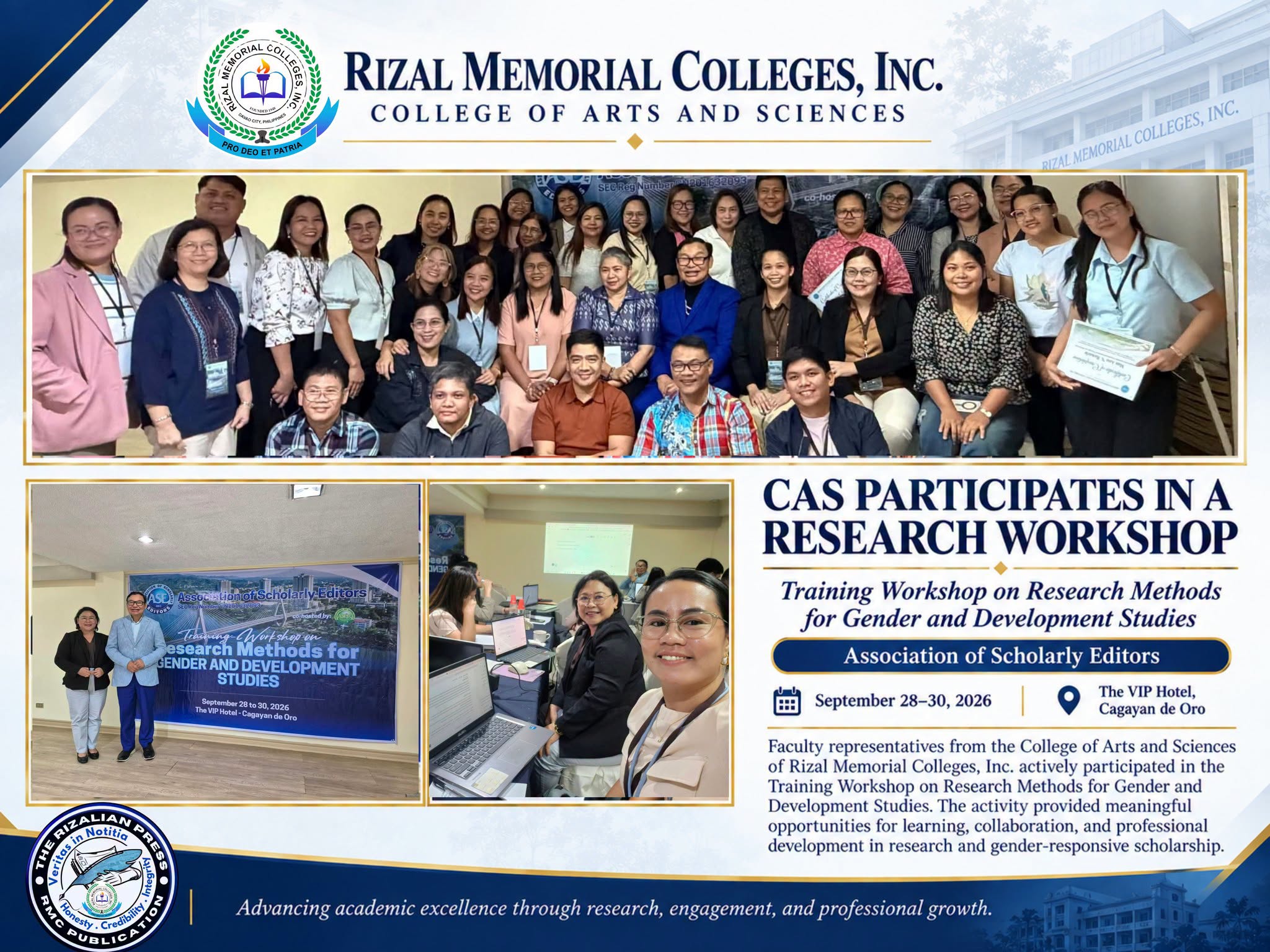
A three-day Training-Workshop on Research Methods for Gender and Development (GAD) Studies was conducted by the Association of Scholarly Editors (ASE) in cooperation with the Association of Scholarly Peer Reviewers (ASPR) from September 28 to 30, 2026, in Cagayan de Oro City. The activity brought together educators, researchers, practitioners, and advocates from Luzon, Visayas, and Mindanao who are committed to strengthening gender-responsive research and development initiatives.
The training-workshop aimed to deepen participants’ understanding of the fundamental concepts and principles of Gender and Development (GAD); introduce research frameworks for GAD studies; develop their ability to apply appropriate qualitative, quantitative, and mixed-methods research approaches in conducting GAD-related studies; and enhance their capacity to utilize gender research findings in policy development, program planning, and advocacy.
The activity highlighted the important role of research in generating evidence that can support gender-responsive policies, programs, projects, and interventions. Through research, GAD practitioners and educators can better understand the experiences, needs, challenges, and aspirations of diverse groups and use evidence-based findings to contribute to the development of more inclusive and equitable communities.
Through this professional development activity, participants were expected to strengthen their capacity to formulate relevant research proposals and generate evidence that can contribute to the planning, implementation, monitoring, and evaluation of GAD programs and initiatives.
As the three-day activity concluded, participants were expected to bring with them not only enhanced research competencies but also a renewed commitment to using research as a tool for positive social transformation. The knowledge and skills gained from the training can serve as a foundation for developing research-based GAD programs and interventions that respond to emerging gender concerns and contribute to building more equitable and inclusive communities.