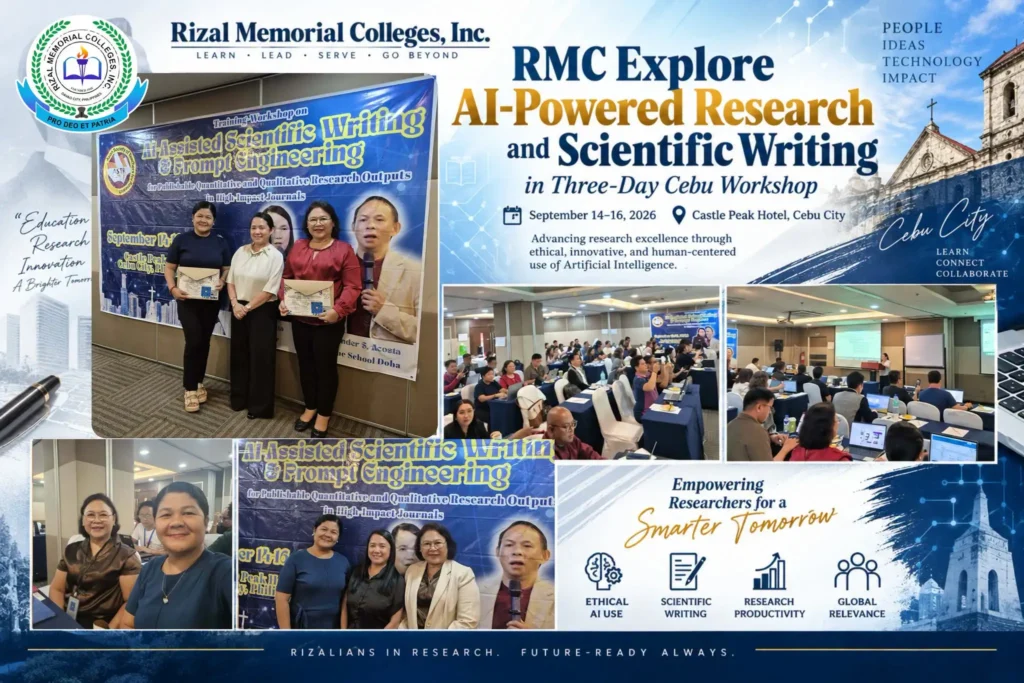
𝗖𝗘𝗕𝗨 𝗖𝗜𝗧𝗬, 𝗣𝗵𝗶𝗹𝗶𝗽𝗽𝗶𝗻𝗲𝘀—𝗥𝗶𝘇𝗮𝗹 𝗠𝗲𝗺𝗼𝗿𝗶𝗮𝗹 𝗖𝗼𝗹𝗹𝗲𝗴𝗲𝘀, 𝗜𝗻𝗰. (𝗥𝗠𝗖), 𝘀𝘁𝗿𝗲𝗻𝗴𝘁𝗵𝗲𝗻 𝗶𝘁𝘀 𝗰𝗼𝗺𝗺𝗶𝘁𝗺𝗲𝗻𝘁 𝘁𝗼 𝗿𝗲𝘀𝗲𝗮𝗿𝗰𝗵 𝗲𝘅𝗰𝗲𝗹𝗹𝗲𝗻𝗰𝗲 𝗮𝗻𝗱 𝗮𝗰𝗮𝗱𝗲𝗺𝗶𝗰 𝗶𝗻𝗻𝗼𝘃𝗮𝘁𝗶𝗼𝗻 𝗱 𝗥𝗲𝘀𝗲𝗮𝗿𝗰𝗵 𝗮𝗻𝗱 𝗦𝗰𝗶𝗲𝗻𝘁𝗶𝗳𝗶𝗰 𝗪𝗿𝗶𝘁𝗶𝗻𝗴 𝗶𝗻 𝗧𝗵𝗿𝗲𝗲-𝗗𝗮𝘆 𝗖𝗲𝗯𝘂 𝗪𝗼𝗿𝗸𝘀𝗵𝗼𝗽 as 𝗗𝗿. 𝗔𝗻𝗻𝗯𝗲𝘁𝗵 𝗕. 𝗖𝗮𝗹𝗹𝗮, 𝗗𝗲𝗮𝗻 𝗼𝗳 𝘁𝗵𝗲 𝗖𝗼𝗹𝗹𝗲𝗴𝗲 𝗼𝗳 𝗔𝗿𝘁𝘀 𝗮𝗻𝗱 𝗦𝗰𝗶𝗲𝗻𝗰𝗲𝘀, 𝗮𝗻𝗱 𝗖𝗿𝗶𝘀𝘁𝗶𝗻𝗮 𝗖. 𝗔𝗿𝗶𝗮𝘁𝗲, 𝗖𝗼𝗺𝗺𝘂𝗻𝗶𝘁𝘆 𝗘𝘅𝘁𝗲𝗻𝘀𝗶𝗼𝗻 𝗖𝗼𝗼𝗿𝗱𝗶𝗻𝗮𝘁𝗼𝗿, participated in the three-day training workshop titled “AI-Assisted Scientific Writing & Prompt Engineering for Publishable Quantitative and Qualitative Research Outputs in High-Impact Journals,” held on September 14–16, 2026, at Castle Peak Hotel, Cebu City.
The training-workshop provided a timely opportunity for academic professionals and researchers to explore the evolving role of Generative Artificial Intelligence (AI) in scientific research, scholarly writing, and knowledge production. It emphasized how emerging AI technologies can be strategically and responsibly integrated into research processes while maintaining academic integrity, intellectual accountability, and the essential role of human expertise.
A central focus of the workshop was the development of effective prompt engineering techniques designed to maximize the ethical and strategic use of Generative AI in scientific research and academic writing. Participants gained insights into formulating precise, purposeful, and context-sensitive prompts that can assist researchers in organizing ideas, refining academic language, strengthening manuscript structure, and improving the overall clarity of scholarly outputs.
The training also explored AI-assisted scientific writing strategies applicable to both quantitative and qualitative research. Through discussions and workshop activities, participants examined how AI-powered tools can support the preparation and refinement of research manuscripts intended for publication in reputable and high-impact academic journals.
Beyond the technical applications of AI, the workshop placed significant emphasis on the critical evaluation and refinement of AI-generated research outputs. Participants were reminded of the importance of verifying information, examining the accuracy and relevance of AI-generated suggestions, safeguarding research integrity, and ensuring compliance with established academic and publication standards.
The training reinforced an essential principle in contemporary research: Artificial Intelligence should enhance scholarly capability, not replace the researcher’s intellectual contribution, critical judgment, and ethical responsibility.
For the RMC representatives, the three-day learning engagement offered valuable perspectives on the changing landscape of scientific research and scholarly communication. It also provided opportunities to reflect on how AI-assisted research practices may contribute to strengthening institutional research productivity, enhancing faculty research competencies, and supporting the development of publishable scholarly outputs.
The participation of Dr. Calla and Ariate reflects the continuing efforts of Rizal Memorial Colleges, Inc. to promote faculty professional development, research innovation, and meaningful engagement with emerging technologies that influence higher education and scientific inquiry.
RMC also extends its appreciation to the College of Arts and Sciences and the participating faculty members for representing the institution in this academic engagement.
Special gratitude is extended to the RMC Administration for its continued support of faculty development, research advancement, and initiatives that strengthen the institution’s pursuit of academic excellence.
Through engagements such as this, Rizal Memorial Colleges, Inc. continues to cultivate a research-oriented academic community that embraces technological advancement while upholding the values of ethical scholarship, intellectual integrity, and responsible innovation.
𝗣𝗿𝗼 𝗗𝗲𝗼 𝗘𝘁 𝗣𝗮𝘁𝗿𝗶𝗮!