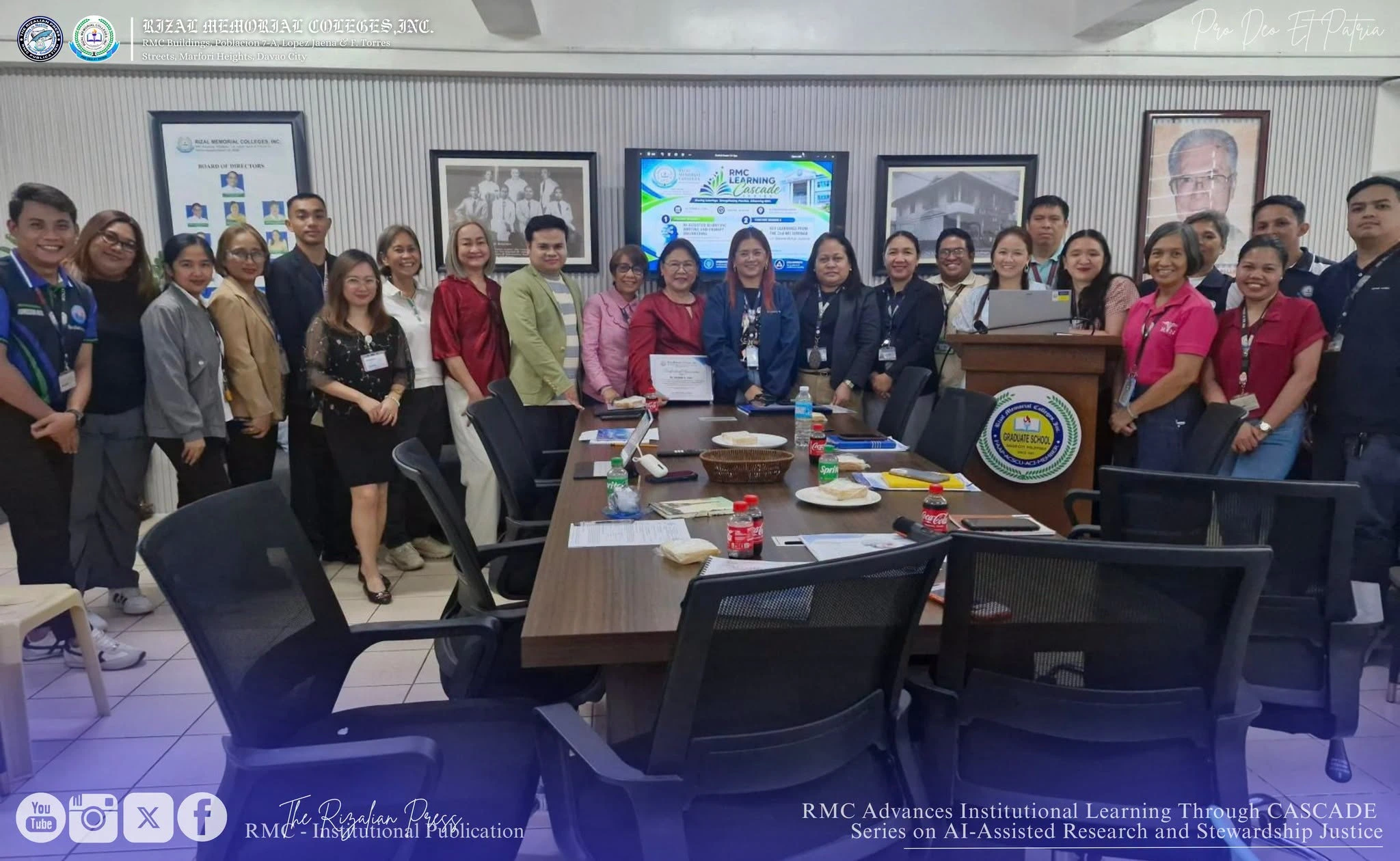
𝐑𝐢𝐳𝐚𝐥 𝐌𝐞𝐦𝐨𝐫𝐢𝐚𝐥 𝐂𝐨𝐥𝐥𝐞𝐠𝐞𝐬, 𝐈𝐧𝐜. (𝐑𝐌𝐂), through its Quality Assurance Office under the leadership of Prof. Liliosa Moneva, Quality Assurance Head, successfully conducted an Echo Seminar on Institutional Learning and Professional Development on October 9, 2026, at the Accreditation Office. The activity formed part of the institution’s CASCADE Series, an initiative aimed at strengthening institutional knowledge-sharing, professional development, and the dissemination of significant learning experiences gained from external academic engagements.
The CASCADE Series highlighted the importance of transforming knowledge acquired from conferences, training programs, seminars, and other professional engagements into meaningful learning opportunities for the RMC academic community. Spearheaded by the Quality Assurance Office, the initiative reinforced the institution’s commitment to continuous quality improvement, academic excellence, and organizational development.
The seminar featured two significant learning sessions focusing on emerging developments in artificial intelligence-assisted scientific writing and the integration of stewardship justice within higher education institutions.
The program commenced with the opening remarks of Mr. Lorenzo Raphael L. Magno, Vice President for Administration and Finance, whose message was delivered on his behalf by Ms. Mary Angeljame Gadian, Human Resource Officer. The message highlighted the importance of continuous professional learning, institutional collaboration, and the effective application of knowledge gained from academic and professional engagements in advancing the institution’s educational mission.
An inspirational message followed from Dr. Gel Marie B. Tiboron, Vice President for Academic Affairs, emphasizing the importance of continuous professional growth, institutional collaboration, and the application of acquired knowledge in strengthening academic practices and institutional effectiveness.
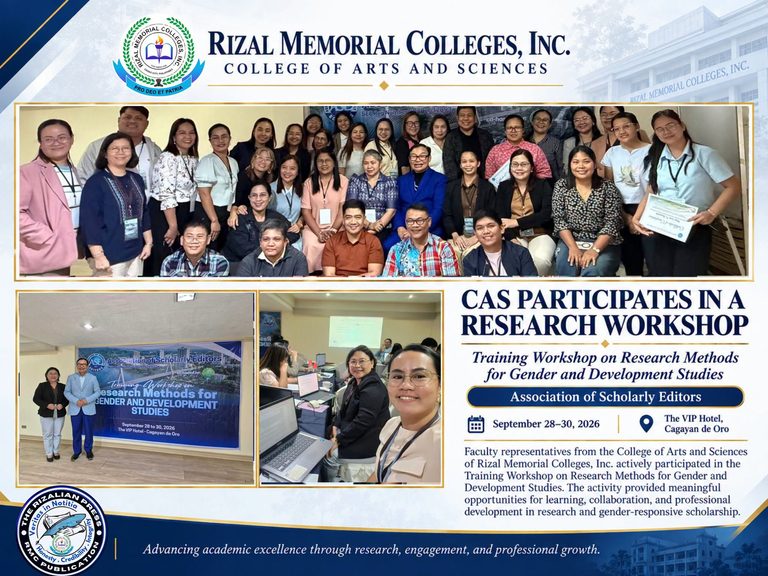
The first echo session was facilitated by Dr. Annbeth B. Calla, Dean of the College of Arts and Sciences, who shared valuable insights from the Training-Workshop on AI-Assisted Scientific Writing and Prompt Engineering for Publishable Quantitative and Qualitative Outputs in High-Impact Journals.
Her discussion explored the transformative potential of artificial intelligence in research development, particularly in enhancing scholarly writing, refining research manuscripts, and improving the preparation of quantitative and qualitative research outputs for academic publication. The session also highlighted the importance of responsible AI integration, ethical research practices, academic integrity, and methodological rigor in ensuring the credibility and quality of scholarly contributions.
The second echo session featured Prof. Rosalie E. Caminero, Director of the Office of Student Services and Affairs (OSSA), who discussed key insights from the 2nd Higher Education Institutions (HEI) Summit on Stewardship Justice.
Anchored in the relevant CHED policy framework identified in the seminar program, the discussion emphasized the responsibilities of higher education institutions in promoting ethical leadership, social accountability, sustainable development, and stewardship-centered institutional practices. The session further underscored how educational institutions could contribute to the development of socially conscious and responsible communities through values-driven governance and meaningful institutional engagement.
Interactive open forums followed both presentations, providing participants with opportunities to raise questions, clarify important concepts, and examine the implications of the discussions for their respective academic and administrative responsibilities.
The program also included the awarding of certificates in recognition of the resource speakers’ contributions to the professional development and continuing education of the RMC community.
The seminar concluded with closing remarks delivered by Prof. Antonio A. Solomon Jr., Director of Internationalization Affairs and Linkages, who underscored the value of sustained knowledge exchange, interdisciplinary collaboration, and the institutional application of learning gained through local and international professional engagements.
Under the leadership of Prof. Liliosa P. Moneva, the Quality Assurance Office continued to advance the CASCADE Series as a mechanism for strengthening institutional learning and promoting a culture of shared responsibility for quality assurance and continuous improvement.
More than a knowledge-sharing activity, the initiative demonstrated RMC’s commitment to ensuring that professional learning extended beyond individual participation and contributed to the collective advancement of the institution.
Through the CASCADE Series, Rizal Memorial Colleges, Inc. reaffirmed its dedication to cultivating an academically progressive, research-oriented, ethically responsible, and globally responsive educational community, consistent with its institutional commitment to excellence and service.
𝐏𝐑𝐎 𝐃𝐄𝐎 𝐄𝐓 𝐏𝐀𝐓𝐑𝐈𝐀!